Sanction talk towards anyone who objects: pressure through dependence
In the reported cases, as the dispute over the report, the fee or documents grows, the tone of the e-mails changes: “suspicious transaction”, a duty to…
★☆☆☆☆ 1.0/5 · 5 complaint cards
The response when a customer objects: sanction talk instead of explanation, counter-claims and no complaints channel.
Each card describes a complaint type; details, the evidence line and what to do are on the card’s own page.
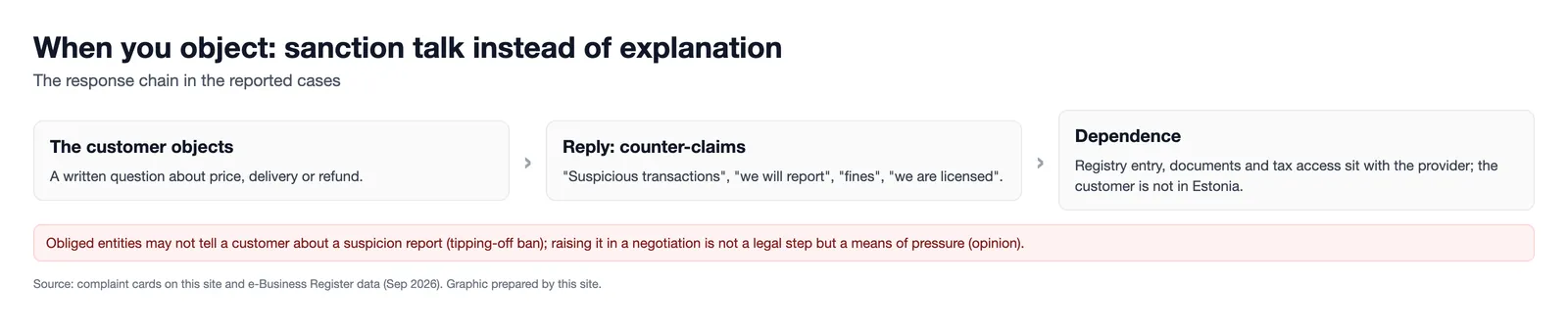
This type describes the response a customer gets after objecting about price, delivery or refund. In the reported cases, instead of an answer to the question, words such as “suspicious transactions”, “reporting”, “fines” or “we are licensed” are used, and there is no separate complaints channel, form or deadline. Because the customer’s registry entry, documents and tax access sit with the provider, this language turns into pressure. Knowing that obliged entities are prohibited from telling a customer about a suspicion report helps to assess such statements correctly. (Opinion: answering an objection with sanction talk instead of an explanation runs the service relationship through dependence.)
In the reported cases, as the dispute over the report, the fee or documents grows, the tone of the e-mails changes: “suspicious transaction”, a duty to…
In the reported cases, when the customer objects that the requested fee is too high, the fee is not discussed; instead the customer is reminded that the…
In the reported cases, after the customer objects to the fee, new conditions appear for work that ran without problems in earlier periods: documents accepted…
In the reported cases, when the customer asks about the price, the delay or the missing delivery, the reply is not an explanation but a counter-claim. The…
In the reported cases there is no defined way for the customer to lodge a complaint: no complaint form, no separate address, no response time, no impartial…
Reporting or sanction talk raised during a fee negotiation is not a legal step but a means of pressure; keep the correspondence and answer with a calm, short notice. If your records are in order there is nothing to do; the real routes are a payment-channel dispute and, if needed, the payment order procedure.
Related guide sections:
Obliged entities under the anti-money-laundering act report on suspicion and may not tell the customer. Mentioning a report in a fee or refund dispute is therefore not a legal step but a means of pressure (opinion). If your records are in order, keep the correspondence and ask for a written answer to your actual question.
As a company you are not a consumer, so the consumer disputes committee is not available; a payment-channel dispute, the payment order procedure or a court action are. Conduct incompatible with the licence can be reported to the FIU. Details in the complaints guide.
Repeat the actual issue in a calm, short written reply, ask for a list of any documents said to be missing, and separate your company’s registry and tax access from the provider. Keep the discussion in writing, not by phone.